Sampling points
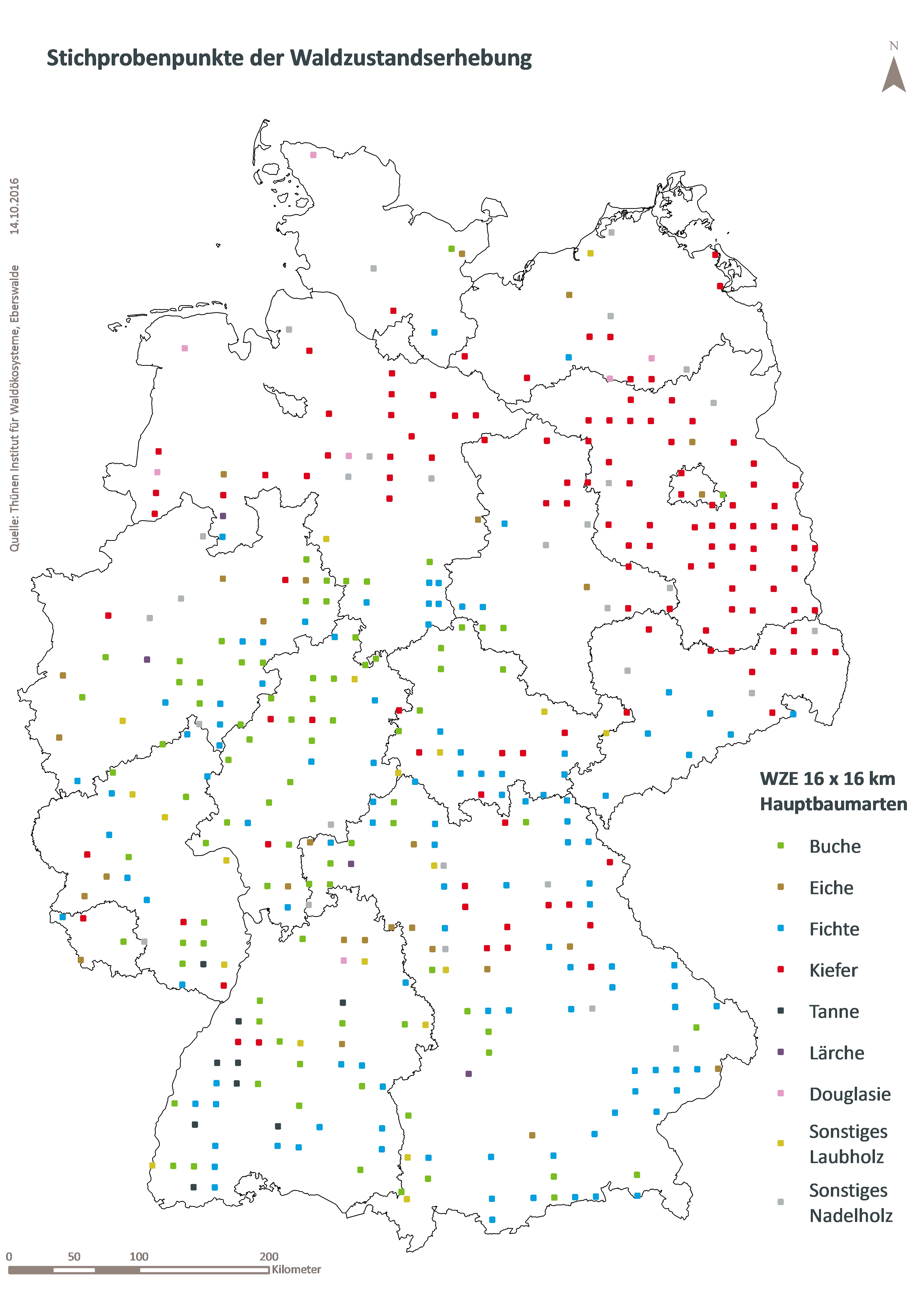
For WZE monitoring, it was specified that the minimum number of sampling points should correspond to 1/256th of the forest area.
This corresponds to a sampling density of a systematic grid with a nominal size of 16 x 16 kilometers. In Germany, this grid was used until 2025 for the nationwide assessment of forest condition (Wellbrock et al. 2018).
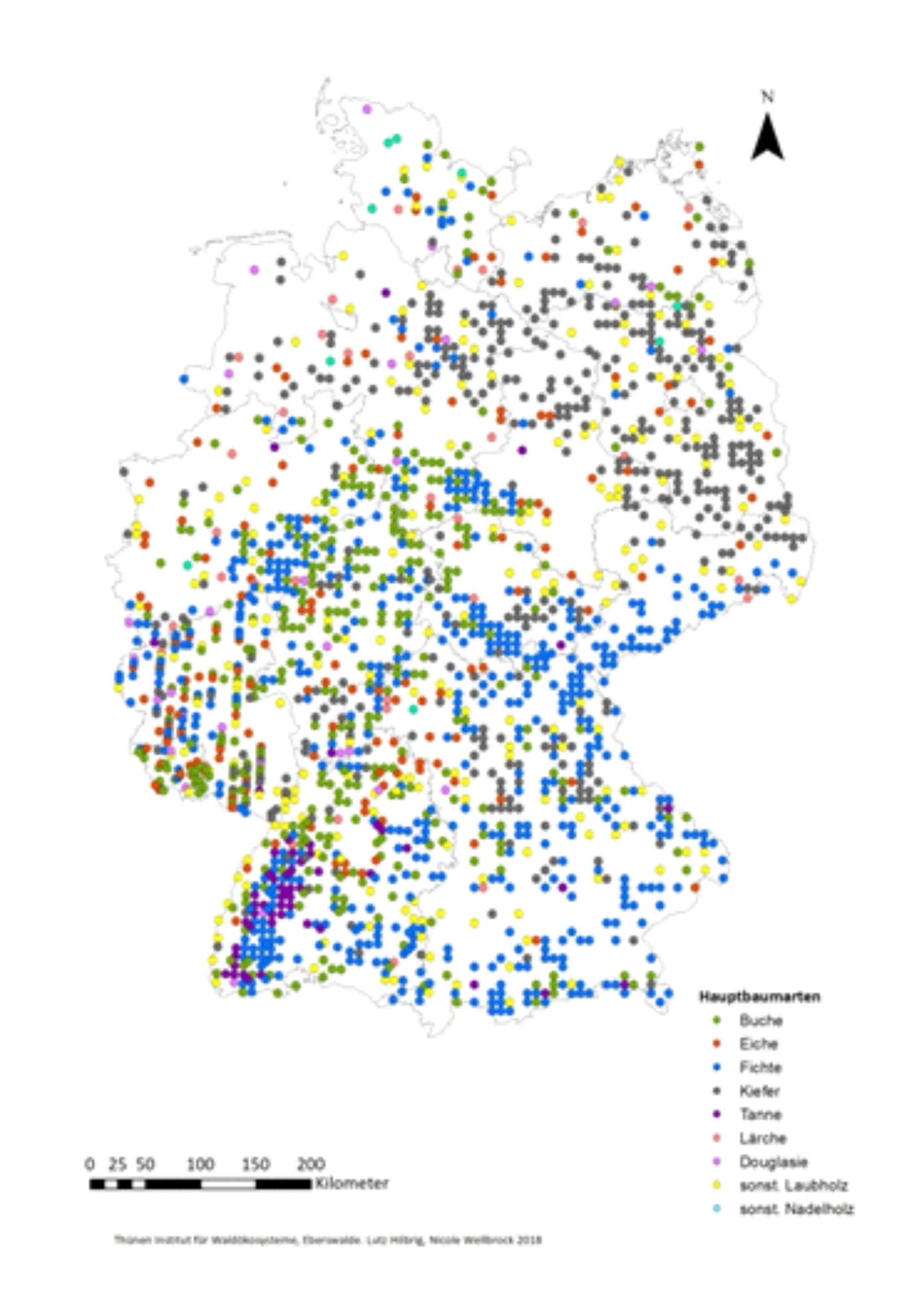
For the conventional nationwide analysis of crown condition data, the 16 x 16-kilometer grid provides sufficient statistical power (Eickenscheidt et al. 2016; Eickenscheidt et al. 2019). Until 2025, only more detailed questions at the national level were addressed using a grid of nominal 8 x 8 kilometers. This grid constitutes the base grid for extensive monitoring within the framework of the Forest Soil Condition Survey (BZE Wald).
During a BZE survey phase, the Forest Condition Survey is also conducted on the nominal 8 x 8 kilometer grid. To evaluate smaller spatial units or to investigate rare events, sampling points are set more densely as needed. For example, some federal states operate a denser grid (e.g., 4 x 4 kilometers) or have stratified and densified the grid for specific research questions (e.g., oak complex disease) (Wellbrock et al. 2018).
The extreme droughts of 2018–2020 and 2022/23 have brought the mortality rates of sample trees into focus, in addition to crown thinning. It remains uncertain which tree species will thrive under climate change. For this reason, the vitality trends of so-called minor tree species—which are relatively rare—are of particular interest. In light of this issue, the Conference of State Forestry Directors decided in October 2023 to standardize the nationwide grid refinement conducted under BZE III to 8×8 kilometers. Consequently, the WZE national analysis has been based on the nominal 8×8 kilometer grid since 2026.
A sample plot is generally designated at every grid point where forest exists as defined by the Federal Forest Act. For the actual establishment of permanent sample plots, it is crucial that the sample plot is suitable according to the applicable guidelines. In individual cases, the inventory management of the respective federal state decides whether a sample plot can be established (Wellbrock et al. 2018). Currently, the national BZE Forest network (8 x 8 kilometers) comprises approximately 1,900 sample plots, and the Forest Condition Survey network (16 x 16 kilometers) comprises 425 sample plots in the forest. The raw data from individual trees are aggregated across the analysis area—Europe, Germany, or federal states—into groups of the main tree species oak, beech, spruce, pine, as well as other hardwoods and other conifers.
Information on the area shares of the main tree species is provided by the results of the German National Forest Inventory.